
02 / 03 · Service, maintenance & repair
Preventive maintenance, inspection and repair
Scheduled maintenance keeps a chamber inside specification and keeps a record on file. When something does fail — a zipper, a seam, a compressor, a concentrator drifting off purity — triage decides how fast a technician needs to be standing in front of it.
Preventive maintenance
Fixed checklist, logged every visit.
A maintenance visit is not a look-over. Every item is inspected, actioned or noted and written into a service record that stays with the equipment — so the next technician, the next owner or an insurer can see the history.
Intervals depend on the manufacturer’s schedule and on duty cycle. A clinic running back-to-back sessions at 1.5 ATA all day is not on the same interval as a home chamber used twice a week, and compressor filter life is measured in run hours, not calendar months.
Inspection scope
What gets checked
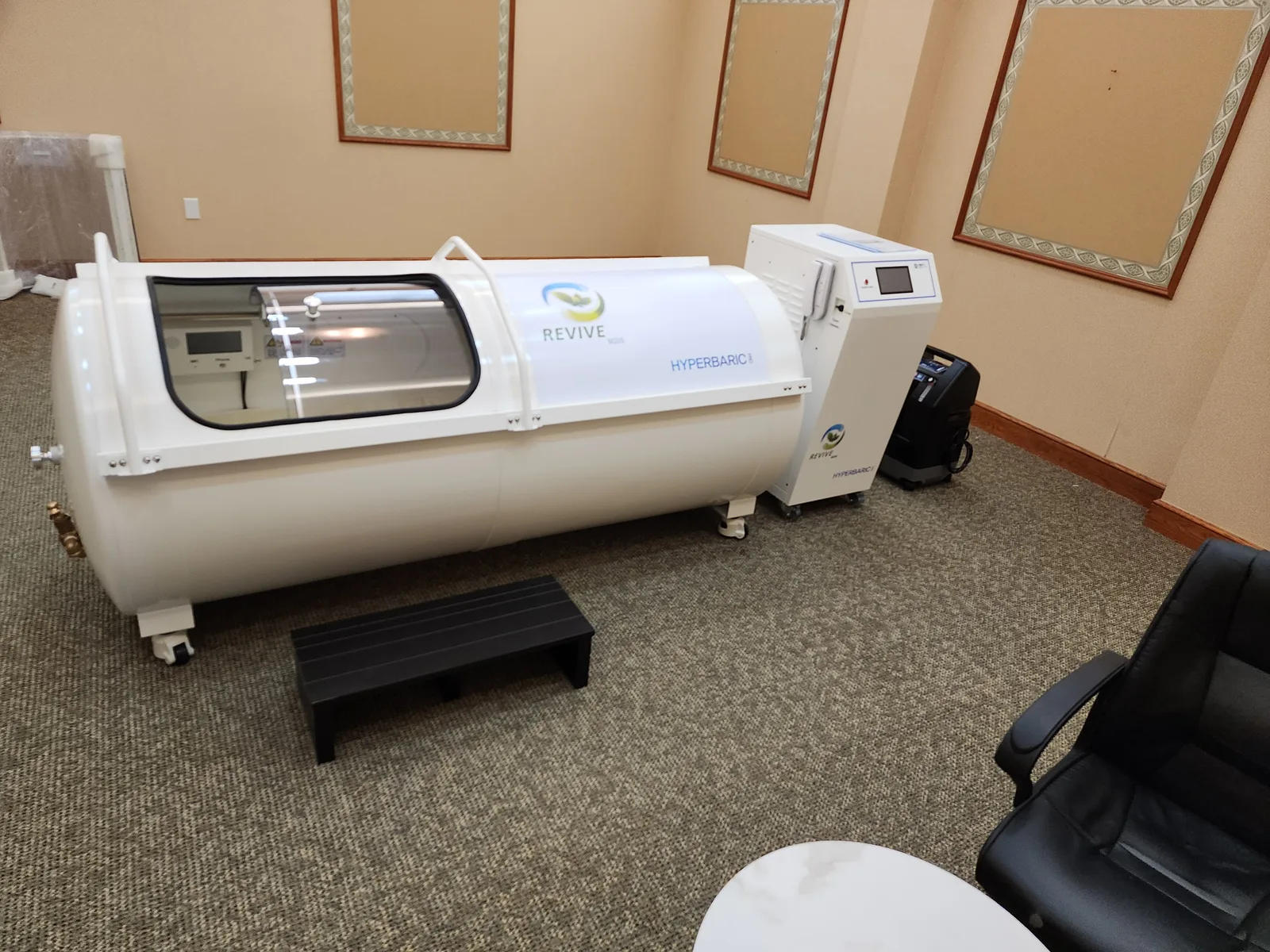
| Pressure envelope | Urethane or TPU bladder and welded seams checked for abrasion, delamination and pinholes. Zipper teeth, slider and lubrication, or pinch-clamp door alignment and gasket set. Hard-shell door gasket, locking mechanism and acrylic view ports inspected for crazing, scratching or clouding. |
|---|---|
| Leak test | Chamber pressurised to rated ATA and held for a documented pressure-decay test. Any decay outside tolerance is traced — closure, seam, port, hose or valve — before the visit closes. |
| Air supply | Compressor run hours, amp draw, discharge temperature, noise and vibration. Intake position confirmed clear of vehicle exhaust, cleaning chemicals, dryer vents and dust. Intake and inline filters replaced to interval. |
| Oxygen system | Concentrator flow verified at rated LPM and output purity measured with an oxygen analyzer. Sieve-bed condition, cabinet filters, tubing, humidifier bottle if fitted, cannula, mask or hood condition. |
| Controls & safety devices | Pressure-relief valve function confirmed, regulator setting checked, gauges verified for accuracy and agreement across compression and decompression, any interlocks exercised. |
| Lines & connections | Hoses, quick-disconnects, fittings and strain relief inspected under working pressure for seepage, kinking or fatigue. |
| Interior | Mattress, upholstery, internal fittings, lighting and intercom checked for condition and function. Interior cleaned with chamber-safe products only — no petroleum or alcohol-based agents. |
| Room & electrical | Cords, plugs, receptacle condition and circuit loading for compressor and concentrator. Grounding, static control, room ventilation and an ambient oxygen check. |
| Operating record | Facility log reviewed with the operator; recurring symptoms identified before they turn into failures. |
| Close-out | Findings, parts fitted, test results, recommendations and next-due interval issued in writing. |
We do not publish one universal service interval. Yours is set from the manufacturer’s schedule, the compressor’s run hours and your actual duty cycle, and it is written on your service record at close-out. As a rule of thumb, a chamber in daily commercial use wants professional attention far more often than a home unit — and intake filters usually need attention long before anything else does.
Repair triage
How we prioritise a fault report
When you submit a repair request, describe the symptom rather than the suspected part. The symptom tells us how urgent it is and what to bring.
Chamber out of service
Will not reach rated ATA, bleeds down under load, compressor will not run or is cutting out on thermal overload, audible air loss at the closure, relief valve weeping, or a burning or oily smell. Stop using it, depressurise fully, and tell us in the request that it is out of service.
Degraded but operating
Slow compression, intermittent compressor noise, gauges disagreeing, minor seepage at a fitting, a zipper getting stiff or catching, concentrator purity drifting, filters overdue. Usable with caution while a visit is scheduled — confirm with us first.
Wear and cosmetic
Mattress and upholstery, light acrylic scratching within tolerance, casters, exterior scuffs, and accessory faults that do not touch the pressure envelope or the oxygen path.
Planned replacement
End-of-life compressors, tired concentrators, ageing hoses and gauges, or components you would rather swap on a schedule than after a failure mid-session.
Parts
Sourced to the make and model
Correct part, first time
Send the make, model and serial number with your request. Chamber families change components between production runs, and the serial number is what resolves it.
Filters, seals & cannulas
Intake and inline filters, gaskets, zipper sliders, tubing, cannulas and non-rebreather masks are the routine items. Keeping a spare set on site shortens every future visit.
Compressors, concentrators & valves
Compressors, oxygen concentrators, relief valves, gauges and view ports are quoted per project — availability and lead time depend on the manufacturer and the supply chain at the time of order.
Have a fault now? Submit a repair request or call 813-519-3232 during business hours.
Start a work order
Tell us the chamber, the site, and the timeline.
Make, model, serial number, photos, site address — send it all in one text or email and we can scope, price or diagnose it without a round of phone tag. Complete requests get worked first, simply because they can be.